How to Upload Image to Canvas Files Html
In this tutorial, we will discuss how to upload and embed images to Canvas, where to observe great quality images, the difference between various image format and which ones are better (spoiler: it depends), and finally some basic paradigm styling tips for improving the menstruation of your Canvas page. Feel free to follow forth in the Canvass course while watching the tutorial.
Uploading vs embedding
Uploading
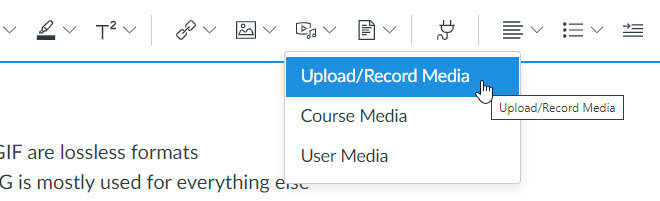
In that location are two approaches for putting an paradigm on a Canvas page. 1 is to upload a picture from your device into Canvas. This perhaps the nearly common arroyo and consists of clicking the Upload Prototype icon on the rich content editor or from the menu click: Insert >> Image >> Upload Image. You will then either drag an image from your estimator or click the interface to search for your paradigm.
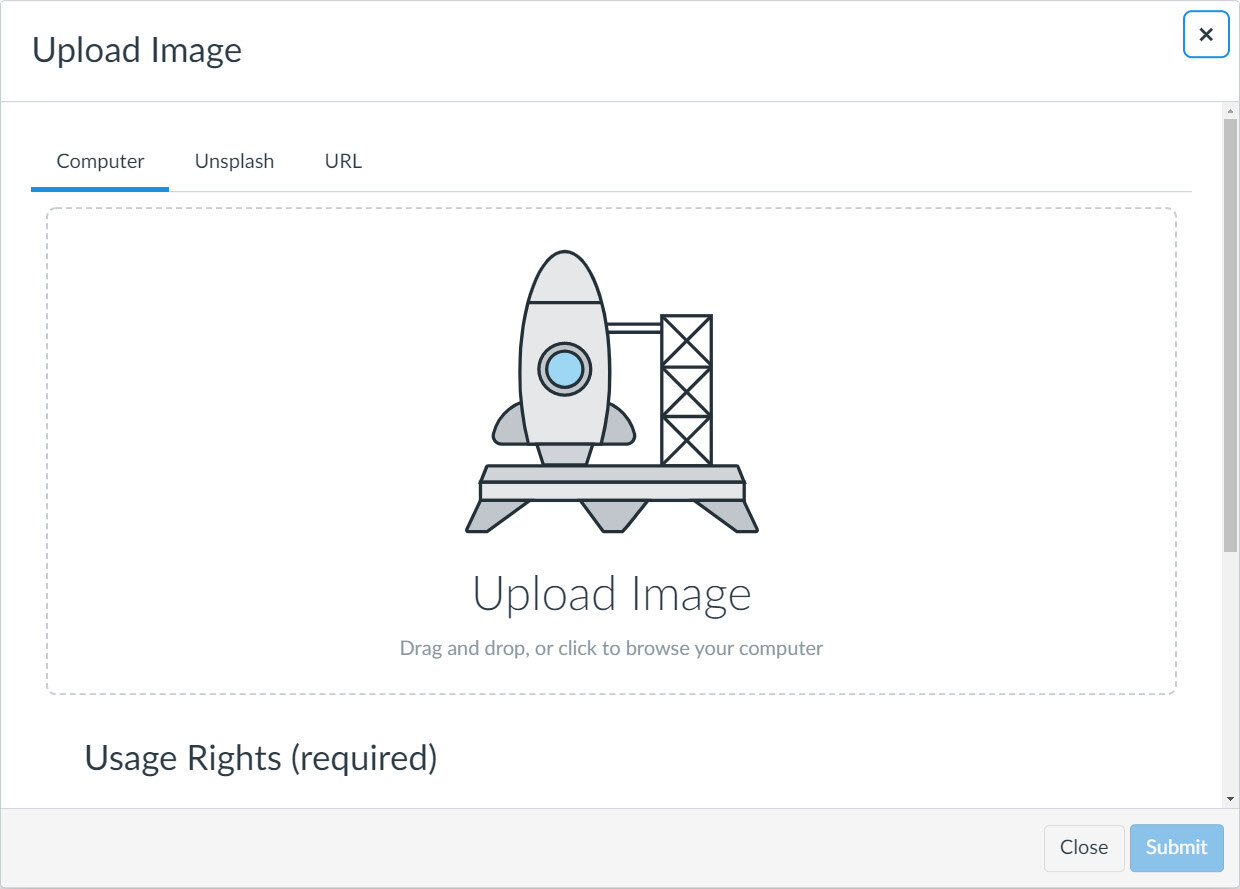
When yous are uploading an image, yous want to exist mindful of the size. If yous have a high resolution image that would be the size of a movie affiche, but you lot but program on using information technology as a 300 pixel movie, so you might consider resizing it prior to uploading into Sheet. This way students with poor cyberspace connections will non need to wait unnecessarily long for the image to load up. An image that is 8MB but just shows up relatively small on the screen will all the same need to load the unabridged file size. For more than detail nigh compression and image file size, keep reading below about the divergence betwixt PNG and JPG paradigm formats.
Embedding
A very practical approach for using images in Sail is to embed it into your class. Images that are on the net can be straight embedded, meaning you don't demand to kickoff download it so upload it. The image doesn't live in Canvas, simply information technology displays in Sheet. The drawback is that if the epitome is taken down from wherever it is embedded from then it will no longer prove up in your course. The ii primary ways to embed an paradigm are to search the Unsplash repository in Sheet, or to embed the image using the direct URL.
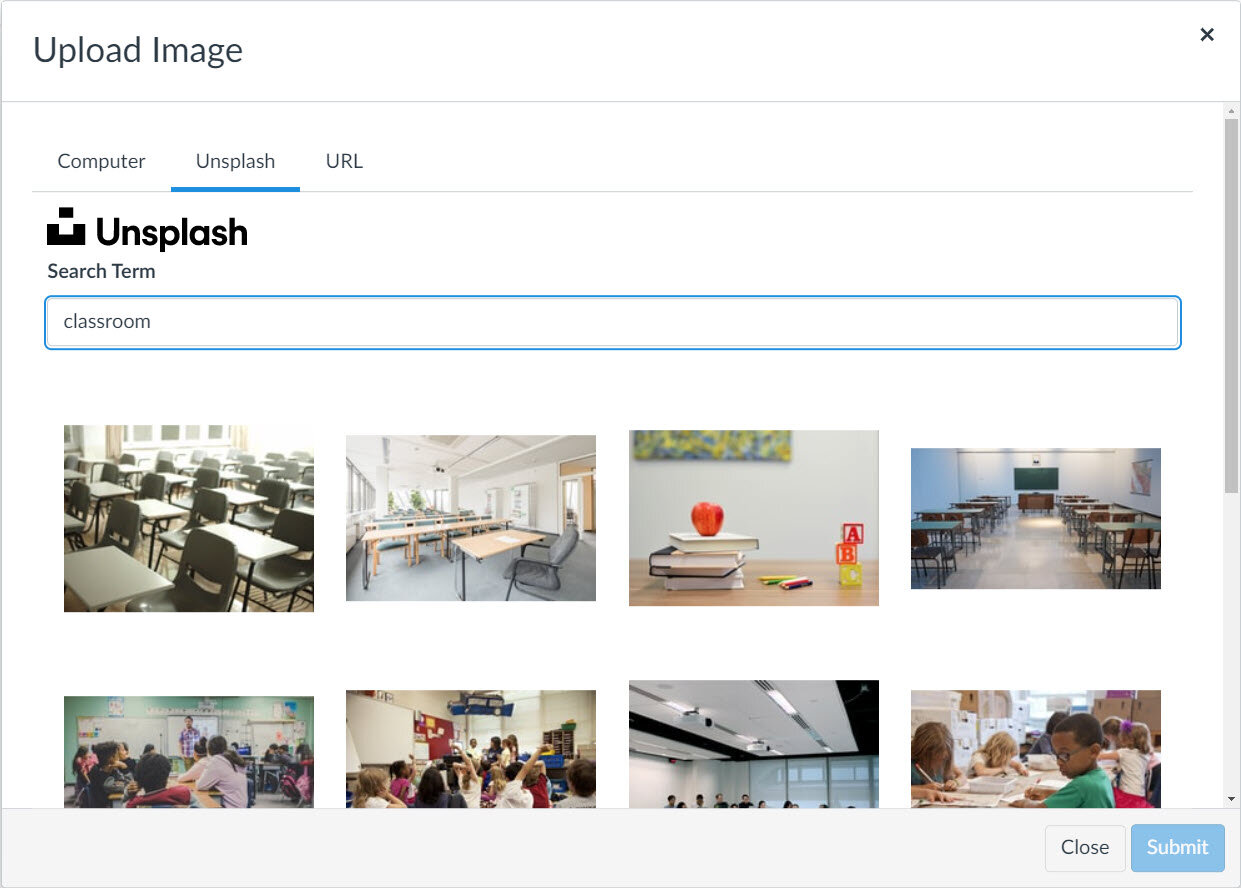

In addition to Unsplash.com, other good websites to find costless, high resolution, and practiced quality images include:
www.pexels.com
www.pixabay.com
or other platforms such every bit canva.com or Microsoft Office 365.
Formatting images in Sail
In that location are a few simple CSS tricks that you tin can do in the HTML editor to assistance align your image and provide margins. This tin assistance requite your form content a more seamless appearance as you organize the components. It also helps requite it a more than professional person feel. The two tricks you lot will want to explore are to bladder your epitome to the left or the right, and to provide margins.
To add the CSS, you will demand to edit your folio in the HTML editor. Locate your paradigm <img src="URL"> and add the following code inside the <img> tag:
style="float: left;"
or
style="float: right;"
You can then add margins around your paradigm inside the styling. If you want your image to float to the right side of the page and you would like 20pixels of margin all around it, so yous would use this code:
style="bladder: correct; margin: 20px;"
If yous desire it to bladder to the left side of the page and you only want margins on the correct and the bottom but not on the left or top, then you would write:
mode="bladder: left; margin-correct: 20px; margin-bottom: 10px;"
Here are ii examples of images that are floating to the left. Ane has a margin to separate the image from the text and the other has no margin.

style="float: left; margin-right: 20px; margin-bottom: 10px;"

style="bladder: left; "
Types of prototype files: JPG, PNG, GIF
tl;dr
-
JPG is a lossy format, whereas PNG and GIF are lossless formats
-
JPG is typically used for photographs, PNG is more often than not used for everything else
-
PNG and GIF support transparency, while JPG does non
-
JPG is a practiced option for minor file sizes
-
PNG is a good selection for high quality
JPG
The JPG file format (sometime seen as JPEG) was adult in the early on days of the net. In that era, file compression was very important, equally net and file transfer speeds were very dull and not always stable. We needed a reliable way to share pictures, and a proficient way to practise that was to shrink large picture files into modest file sizes. The trade-off was that file pinch means pictures lose a lot of quality. Thus, JPG is referred to a lossy compressed file format. At the time, JPG was a fantastic alternative to BMP. JPG is still a standard format for photos and realistic imagery, especially when one wants to avoid sending big files - such as through email or sent from a telephone.
Fun fact, for those who remember older operating systems, such as MS-DOS, the file extensions could not exceed three characters, which is why JPEG became JPG. Today you might come across reference to both file extensions, but they are exactly the same. JPG remains the more than popular extension.
PNG
Unlike JPG, a PNG image is a lossless format, which means any compression does non touch on the quality of the image. The drawback is that PNG file sizes tend to be much larger than JPG. With bandwidth existence optimized and estimator and mobile spider web devices being able to procedure large quantities of data, PNG has get the standard file type for web imagery, since it is ideal for graphics, text, and other art.
One of the notable aspects of PNG files is the ability to back up transparency. Whereas JPG fills in any transparent portions of the paradigm with white, PNG volition go out those areas empty. This is user-friendly when doing photograph manipulation in programs like Photoshop or Gimp where you don't want a "white box" surrounding the edges of the object, shape, or image.
GIF

Ugachaka
Baby
GIF is a file format that originated in the aforementioned era as JPG, simply compresses in a lossless similar to PNG. Too similar to PNG, the GIF format supports transparency. What has traditionally distinguished GIF from the other formats is the power to support animations. Maybe the about notable animated GIF is the dancing baby, or "Ugachaka Baby" of the tardily ninety'southward.
Apply of blithe GIFs in instruction can be benign for demonstrating simple processes or instructions. Equally an ornamental element, animated images (such equally the dancing baby) can be exceedingly distracting and may detract from more of import content. Be wary of using animations in presentations - even when the blitheness seems relevant to the topic.
Summary
JPG
-
is a lossy format (not high resolution)
-
is typically used for photographs
-
does non support transparency
-
is a skilful selection for pocket-size file size
PNG
-
is a lossless format (high resolution)
-
is used for images that are created (due east.g. logos), that include text, have item, or are high resolution
-
supports transparency
-
is the most mutual standard for online imagery
GIF
-
is a lossless format (high resolution)
-
supports transparency
-
supports blitheness

Source: https://www.howtocanvas.com/create-amazing-pages-in-canvas/use-images
0 Response to "How to Upload Image to Canvas Files Html"
Postar um comentário